Factory-direct lash supply for wholesale buyers. Explore solutions.

English
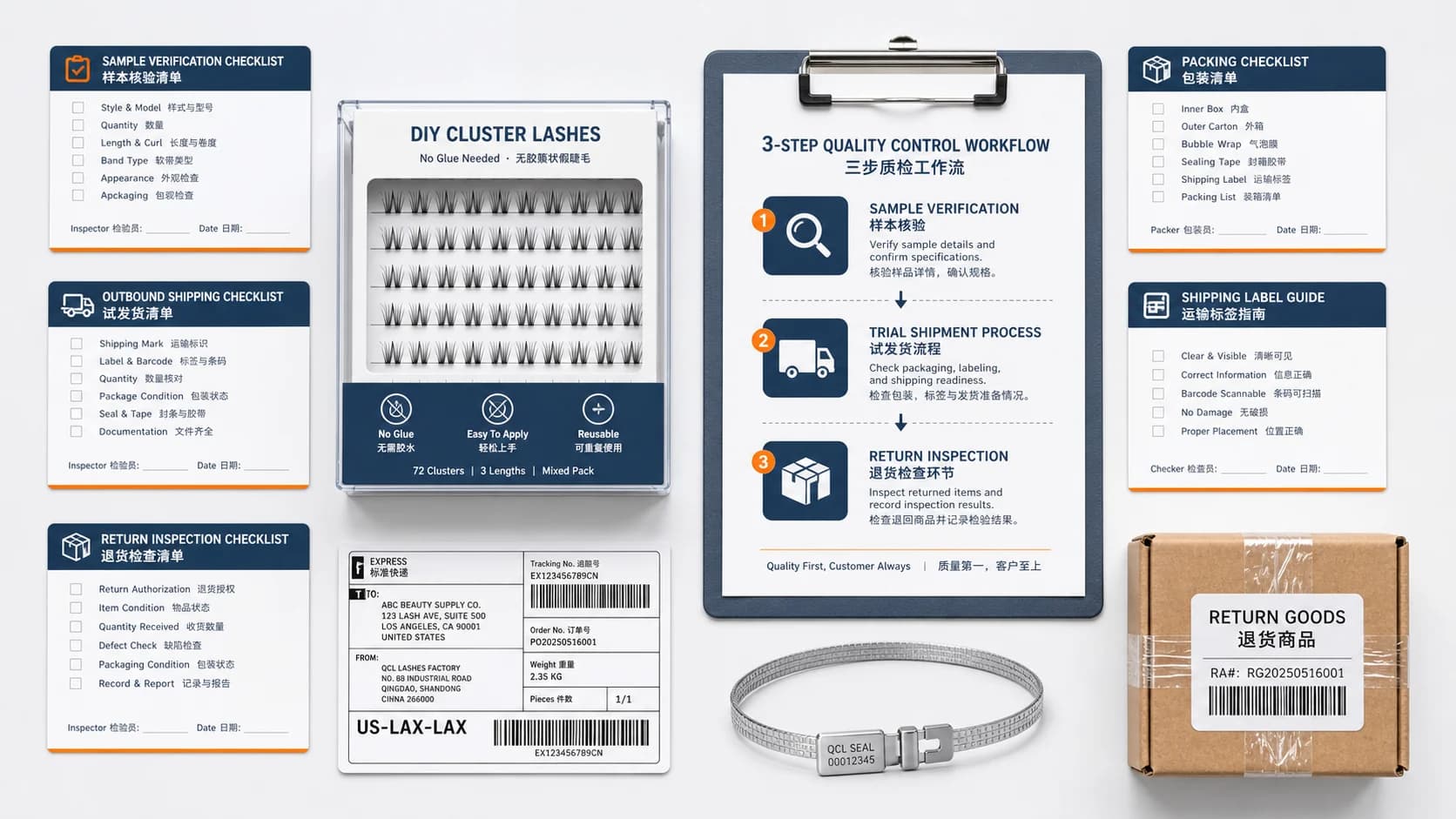
No-glue cluster lashes are often positioned as differentiated and lightweight to launch, but merchants usually underestimate the hidden cost of first-batch inconsistency. A sample that looks good may still differ in curl retention, lash thickness, glue-free bonding feel, color accuracy, or packaging details once production scales.
Instead of approving everything from one sample, use a three-step QA loop: sample, trial order, then return check. This converts one-shot approval into evidence-based release decisions.
Before release, replace visual-only checks with measurable criteria. Verify at least eight items:
After the sample passes, run a small trial of 1–2 SKUs only.
Only release at scale after the trial signal is validated:
If key thresholds are not met, delay full production and keep only the sample and trial records for follow-up with the supplier.
Create a QA card for each SKU with fields: sample date, trial quantity, trial outcomes, return categories, and supplier correction log. Keep these records for four cycles, then use these to decide whether to continue, renegotiate, or stop the item.
No-glue cluster lashes benefit from fast iteration, but the winning approach is not “faster launch”; it is “fewer costly corrections.”